
A Unique Colorado History…
For everything there is a season, and a time for every matter under heaven. Ecclesiastes 3:1
Our church, which is older than the State of Colorado, has been serving God and His worshipers in the Plum Creek Valley since 1872. Listed in the National Register of Historic Places, St. Philip was recognized as “an emblem of the best features of pioneer life all over the world, a memorial to people determined to bring the best of their life to a new and difficult one.”
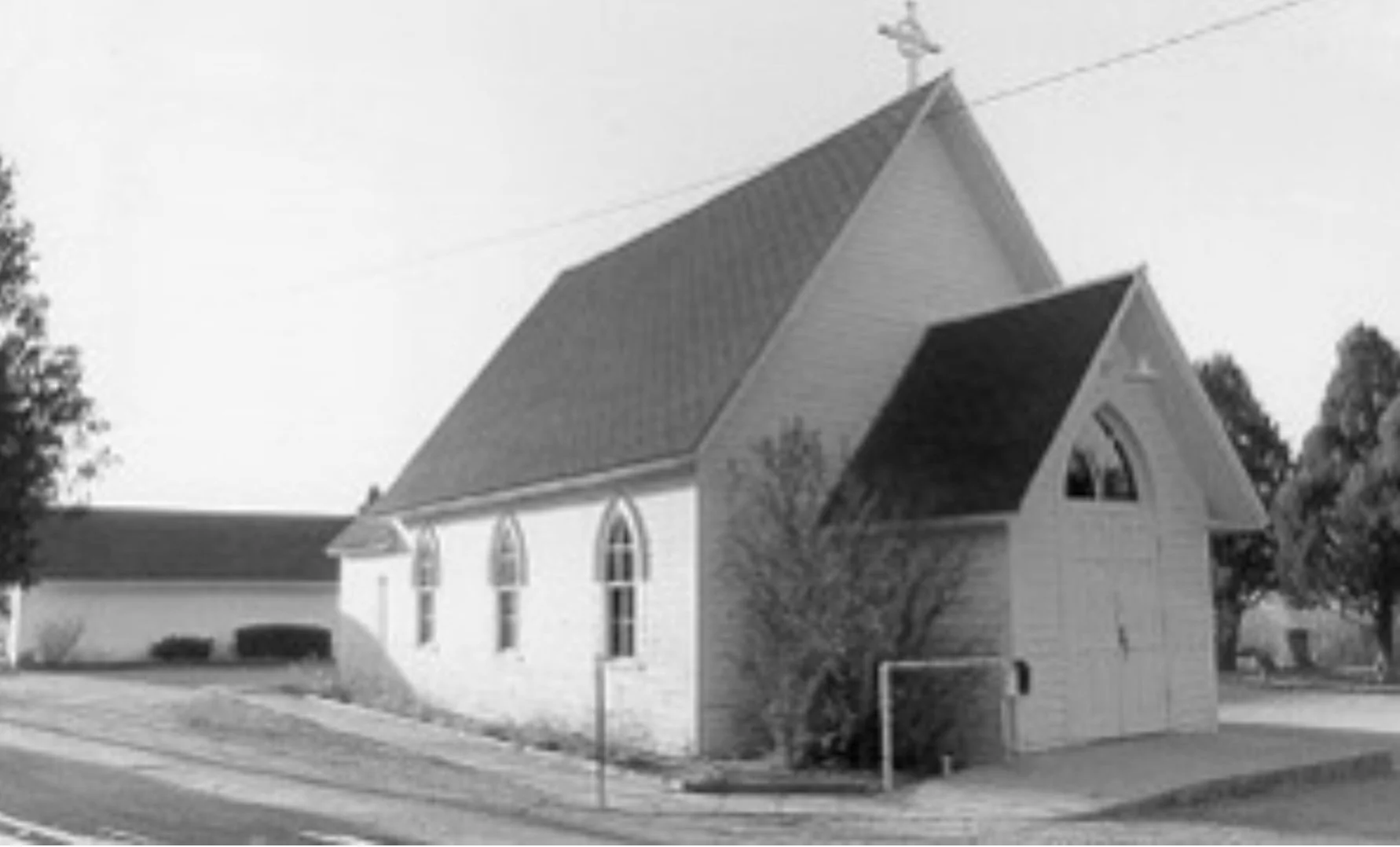
Built in 1872, the white clapboard church is surrounded on the north, east, and south sides by the Bear Canon Cemetery, where present-day community members come together to solemnly honor The Stations of the Cross and Memorial Day. With its steeply pitched roof and pointed arched windows, it is a well preserved example of Gothic Revival architecture that inspired the church’s first carpenter, Newton Grout, who was a former Union Army drummer.
Credit HistoryColorado.org
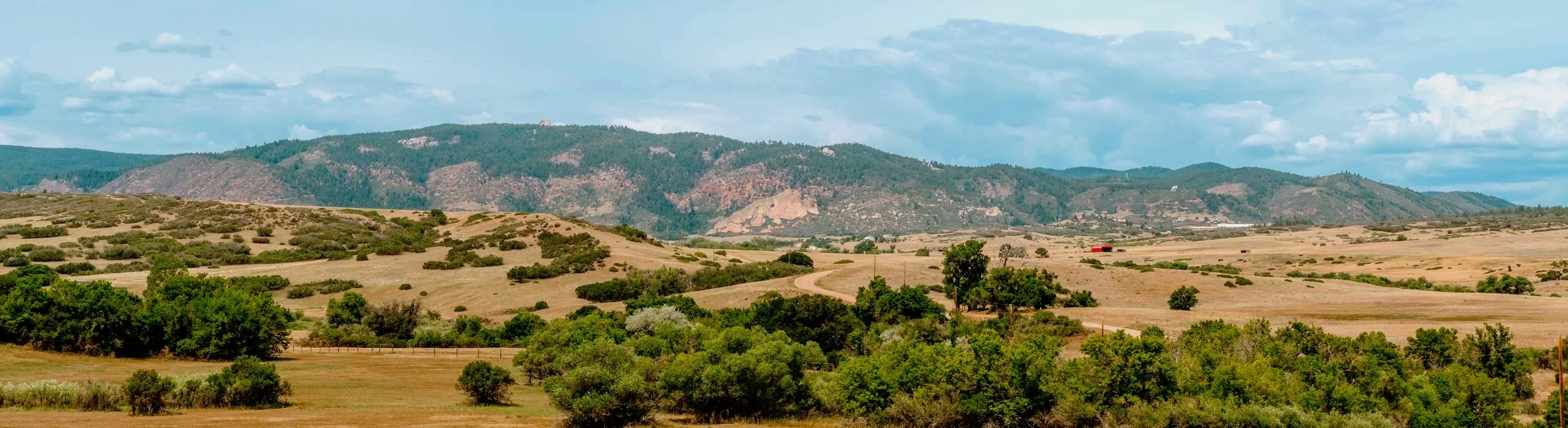
If you are traveling on Hwy 105 and you look west just south of Wolfensberger Road, you will find a rare beauty, St. Philip in the Field Episcopal Church. This lovely white framed church has stood for 154 years. It is surrounded by Bear Canon Cemetery where generations of West Plum Creek families are buried. This historic little church tells a fascinating story and is an important part of the folklore and fiber of Douglas County. See our parishioners’ histories here.
Credit: Heather Phipps Photography
In the years of 1869 to 1871, the pioneer families felt a need of some kind of church and began to plan to build. Mr. Newton S. Grout was hired to build the church. It was built over the period of two months in 1872 – four years before Colorado became a state. Mr. H. H. Curtis, his boys, and others hauled the rough lumber from Round’s Mill in the mountains, coming down Devil’s Gap on Garber Creek, a most hazardous trip to construct the building. Wooden planks supported by heavy grocery boxes served as pews. The church was built without the help of any group or denominations.
“St. Philip’s Church and Bear Canon Cemetery represent in this relatively new section of our country a sense of continuity with the past and hope for the future...”
Once the outer portion of the church was finished, Methodist Circuit Riders came and held services along with clergymen of other denominations. However, all history has twists and turns. A man named Lambert came into the community, posing as a minister, and urged the members to raise money to complete the church. He was so well liked that he was allowed to hold on to the monies that were collected from various fundraisers. When they had raised over $600 (about $20,000 in today’s dollars!) to finish the church, Lambert and the money disappeared! This was so discouraging to the members that there were no further improvements to the church for many years. Finally, opening services for a completed church were held December 23, 1888.
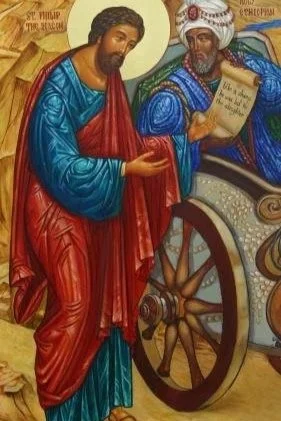
Saint Philip and the Ethiopian Official
Now part of the Episcopal Church in Colorado, St. Philip was first consecrated in 1888 by Episcopal Bishop William Spaulding who is credited with naming St. Philip in the Field because it reminded him of St. Philip the Deacon’s evangelical encounter with an Ethiopian official described by St. Luke the Evangelist in Acts 8:26-40.
Honoring the many generations of current and former members and a lineage of inspiring clergy, in 1958, the church Lay Leaders initiated a Homecoming Service that is still held and celebrated annually.
With a unique Colorado origin story as a church, the members of St. Philip welcome you. Whether indigenous to Colorado, a descendant of a Plum Creek pioneer family, or a recent arrival to the breathtaking surroundings of Western Douglas County, you are welcome here.
St. Philip’s continues in ministry, seeking to grow in love for God, neighbor, and especially those in need, as Jesus taught us.
But do not overlook this one fact, beloved, that with the Lord one day is as a thousand years, and a thousand years as one day. 2 Peter 3:8